If your stomach has ever looked like you swallowed a basketball for no good reason, you’re not alone. Mine does it all the time. One day I’m fine, next day my jeans are fighting for their life and I feel like I’m carrying around a water balloon under my shirt. Super fun, right?
That’s how I ended up deep in the world of lymph drainage massage for the stomach. Not the deep tissue stuff that leaves you bruised. The super light, almost weirdly gentle kind. And yeah, it actually helps with the bloating and swelling more than I expected.
I’m going to break this whole thing down the way I’d tell a friend over coffee. No fancy jargon overload. Just what works, what doesn’t, and what I’ve noticed on my own body.
What the Heck Is Lymph Drainage Massage Anyway?
Lymph drainage massage (people also call it manual lymphatic drainage or MLD) is this specialized technique that uses really light pressure. Like, lighter than you think is even useful. The point is to help move lymph fluid so it doesn’t just sit there and make you puffy.
Your lymphatic system is kind of the underdog of the body. It doesn’t have a big pump like your heart. It relies on you moving around, breathing deep, and sometimes a little outside help. When it slows down, fluid hangs out in places you don’t want it. Especially the stomach.
I remember the first time a therapist did it on me. I kept thinking, “Is this even doing anything? You’re barely touching me.” Then I stood up later and my stomach felt less tight. Weird, but good weird.
The pressure is supposed to feel like the weight of a nickel or just stretching the skin a little. If it hurts or feels like a regular massage, it’s too hard. Hard pressure can actually shut those little vessels down. Learned that the hard way when I tried to “help” more at home once. Didn’t go great.
How Your Lymphatic System Actually Works (Simple Version)
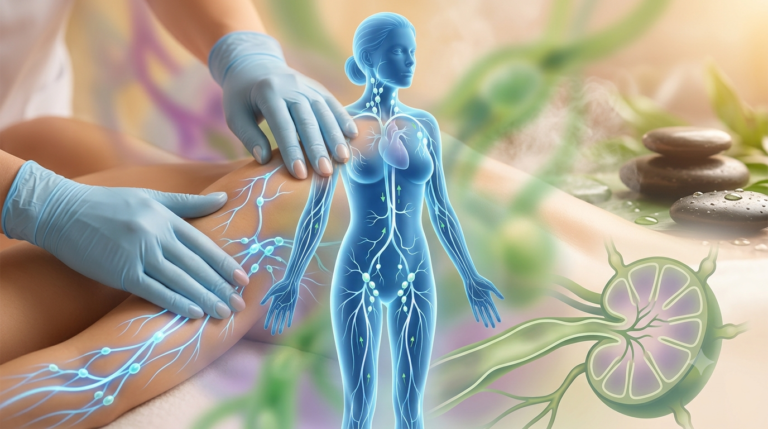
Think of it like a bunch of tiny roads under your skin. They pick up extra fluid, junk, and immune cells from your tissues. Then they filter it through lymph nodes and send the cleaned stuff back into your blood.
When everything’s moving, you don’t notice it. When it gets sluggish — from sitting too much, hormones, stress, travel, salty food, whatever — fluid pools. And the belly is a popular hangout spot for that fluid.
There are a bunch of lymph nodes around the abdomen and groin. So when things back up there, you feel it. Clothes dig in. You look pregnant even though you’re not. That heavy, stretched feeling shows up. Ever had that? Yeah. Not my favorite.
Why the Stomach Area Gets Special Attention
Abdominal lymph work targets the exact spot a lot of us struggle with. Hormonal shifts (looking at you, period week), long days at a desk, certain foods, even just being stressed can all lead to more fluid hanging around the midsection.
Important note though: this helps most with fluid-type bloating. The kind where you feel waterlogged. If your bloating is pure gas from eating something that doesn’t agree with you, this isn’t going to be the magic fix. Different problem.
I’ve had days where my stomach was tight and puffy even though I ate clean. After a session focused on the abdomen, it calmed down. Not gone forever, but noticeably better. The temporary flatter look is nice too. Clothes fit easier for a bit.
How This Massage Actually Reduces Bloating and Swelling
Here’s the basic idea:
The light strokes create a little pressure difference that encourages stuck fluid to move toward the lymph nodes. Those nodes do their filtering job. Less trapped fluid means less swelling and less of that uncomfortable tight feeling.
Some research shows this kind of massage can increase lymph flow. Other studies have looked at reductions in abdominal measurements with regular sessions. Abdominal techniques in general can also help with gut movement for some people, which takes the edge off that stuck bloated sensation.
It’s not going to rewrite your body. But for the fluid retention side of things, it gives your system a useful push. I’ve felt the difference enough times that I keep coming back to it.
What People Actually Notice (Including Me)
Here’s the real-world stuff:
- Less bloating and water retention around the stomach
- That heavy, tight feeling eases up
- Clothes fit better for a while
- You look less puffy in the mirror
- It feels relaxing, which is a bonus on stressful days
- Some people get a little energy lift when things start moving better
I did one after a long flight and a dinner that was way too salty. Normally I’d wake up looking three months pregnant. After the massage that evening, my stomach felt lighter. Still not flat like a model, but way less swollen. That was enough for me to keep going.
What a Professional Session Is Actually Like
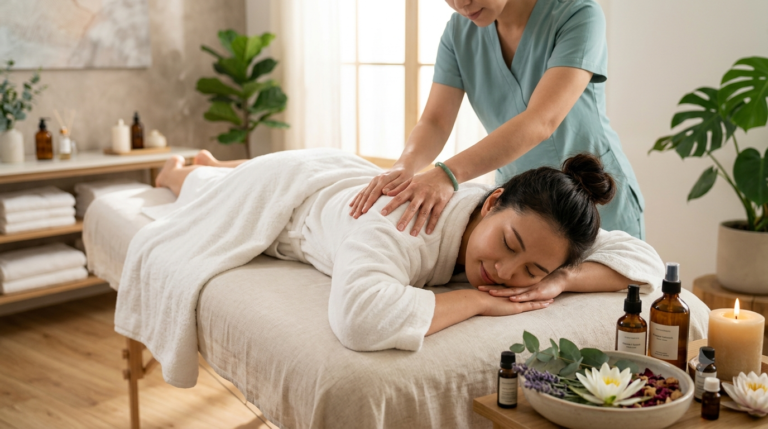
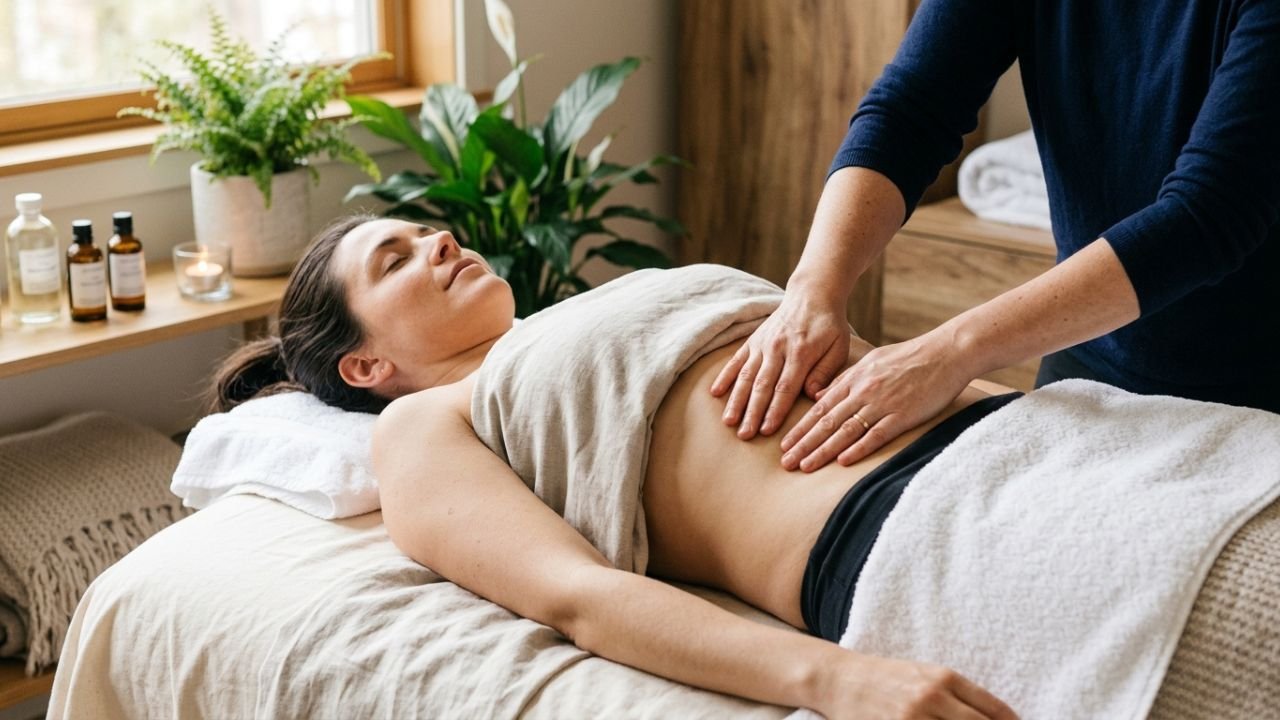
You lie down, usually with sheets covering you. The therapist starts at the neck and collarbones with these soft circular or pumping motions. Then they work the armpits and groin areas before moving to the stomach.
On the belly the strokes are slow and directional. Sometimes toward the groin, sometimes up. It feels more like someone’s gently moving the skin than a massage. A lot of people get sleepy. I almost dozed off the first time.
Sessions usually run 45 to 60 minutes. You might pee more afterward. That’s the fluid starting to shift. Kind of satisfying when it happens.
Can You Do This at Home?
Yes, but carefully. You can learn basic self-massage, but the pressure has to stay crazy light and the direction matters. Go too hard and you can make things worse or just waste your time.
Here’s a simple version a lot of people start with (check with a doctor first if you have any health stuff going on):
- Start with a few deep breaths. Hand on your belly.
- Gently work the neck and collarbone area with soft circles.
- Light pumps or strokes under the armpits.
- Same idea near the groin.
- On the stomach, use flat hands and make slow gentle circles or strokes toward the center and down. Keep it feather-light.
- Finish with more breathing.
Five to fifteen minutes a few times a week is plenty when you’re starting out. Stay hydrated and walk around a bit after if you can.
Watch some videos from actual certified people so you see how light it really is. Guessing the pressure is where most of us mess up.
Professional vs Doing It Yourself
Here’s a quick side-by-side so you can see the difference:
| Aspect | Professional Session | At-Home Version |
|---|---|---|
| Technique accuracy | Trained hands, correct pressure | Easy to press too hard |
| How strong the results feel | Usually more noticeable | Milder, builds up with consistency |
| Cost | Costs money each time | Free once you know what you’re doing |
| Safety | Higher if the person is properly trained | Fine if you stay light and careful |
| Best for | Bigger swelling, learning the method, post-procedure | Everyday mild bloating, maintenance |
| Relaxation | You just lie there and zone out | You’re the one working |
Personally I like getting a pro session every so often to reset, then keeping it going at home. The combo works better for me than either one alone.
Who This Is Good For and Who Should Be Careful
Most people who are generally healthy can try the gentle version. It’s popular for:
- That hormonal or fluid-type bloating
- Feeling puffy after travel or long days sitting
- Supporting recovery after certain procedures (with your doctor’s okay)
Skip it or talk to a doctor first if you have:
- Heart failure or serious heart issues
- Major kidney problems
- Active infections or fever
- Blood clots or history of them
- Certain types of cancer (unless your medical team says it’s fine)
- Any acute medical situation
When you’re not sure, just ask. It’s not worth risking.
Little Things That Make It Work Better
Drink water before and after. Moving around helps — even a short walk. Breathe deep while you’re doing it. Try not to load up on super salty food right before if bloating is your main complaint. Consistency beats one perfect session.
I notice the biggest difference when I pair the massage with daily walking and not being a total potato on the couch. The massage alone helps. Adding movement makes it stick longer.
Myths That Need to Die
It does not melt belly fat. Any smaller look is from less fluid, not fat disappearing.
It’s not some total body detox that fixes everything. Your liver and kidneys still do the real cleanup work.
Harder pressure is not better. It’s worse.
One session will not give you permanent results. Think of it more like a helpful reset that works best when you keep supporting the system.
FAQs People Keep Asking
Does this actually reduce bloating?
For fluid-related bloating and swelling, yes. A lot of people (me included) feel and look less puffy afterward.
How fast do results show up?
Some people feel lighter right after the first time. Others need a few sessions before it really clicks.
Does it hurt?
It shouldn’t. If it does, the pressure is too much.
Can it help with gas or constipation?
It might support better movement in the gut for some people through the abdominal work, but it’s not the main solution for those issues.
How often should I do it?
For everyday maintenance, a couple times a week at home or every couple of weeks with a pro works for a lot of people. Adjust based on how your body responds.
Is it okay during pregnancy?
Usually the abdominal part is avoided or changed a lot. Get the green light from your doctor.
Will the scale go down?
Maybe a little temporary water weight. Don’t expect big fat-loss numbers from this.
Wrapping This Up
Lymph drainage massage for the stomach isn’t some miracle that turns your midsection into a magazine cover overnight. It’s a gentle tool that helps your body move fluid better when things get backed up. For the kind of bloating and swelling that comes from fluid retention, it can make a real difference in how you feel and how your clothes fit.
If you’re sick of the puffy, tight stomach days, it’s worth trying. Keep the pressure light, stay consistent, and pay attention to what your body tells you. You might be surprised how much better things can feel with a little smart help.
Go give it a shot. And if you try it, I’m curious how it goes for you. Just don’t come yelling at me if you start looking forward to those weirdly gentle belly sessions more than you expected. 🙂