Your knees acting up again? Mine used to sound like a bag of chips every time I stood up from the couch. Not cute. I spent months pretending it was fine, then finally got smart about strengthening the stuff around the joint instead of just icing it and hoping for the best.
Yoga ended up being the thing that actually helped. Not the fancy Instagram kind. Just simple knee yoga poses that build support and keep things from grinding. I’m going to walk you through what worked for me, the exact poses I still use, and how to do them without making anything worse. No lectures. Just real talk.

Key Knee Yoga Poses Comparison Table
| Pose | Main Benefit for Knees | Difficulty | Best For | Easy Modification |
|---|---|---|---|---|
| Mountain Engagement | Teaches better standing alignment | Easy | Everyday posture | Soften the knees a little |
| Chair Pose | Builds quad and glute strength | Medium | Overall joint support | Use a wall or stay higher |
| Warrior II | Strength plus alignment under load | Medium | Functional strength | Shorten the stance |
| Bridge Pose | Strengthens back of legs and glutes | Easy-Medium | Posterior chain support | Lift lower or try single leg carefully |
| Wall Sit | Endurance without balance demand | Easy | Beginners or recovery | Shallower angle |
| Gentle Knee Circles | Keeps mobility and lubrication going | Easy | Warm-up or sensitive days | Keep the range small |
Why Knees Fall Apart (And How Yoga Helps)
Knees take a beating. Walking, stairs, standing too long, sitting too long—they absorb all of it. When the muscles around them get lazy or tight, the joint starts complaining.
Yoga helps because it makes the quads, hamstrings, glutes, and calves do their job. Stronger muscles mean the knee doesn’t have to handle everything alone. Better alignment means less weird pressure. And the slow movement keeps the joint from getting stiff and sticky.
Ever notice how some people just pop up from the floor like it’s nothing while the rest of us make that old-person noise? A lot of that comes down to keeping the support system awake. Yoga does that without pounding the joint the way running does.
I started noticing changes after a few weeks. Stairs stopped feeling like a negotiation. Getting out of the car didn’t come with a soundtrack. Your mileage may vary, but the basic idea holds: protect the joint by making the surrounding muscles stronger and smarter.
Safety Stuff You Actually Need to Hear
Look, knees hate heroes. If something feels sharp or pinchy, stop. Dull stretch is usually okay. Sharp pain is your body saying “nope.”
If you’ve got existing injuries, arthritis, recent surgery, or swelling that won’t quit, talk to a doctor or physical therapist first. I’m not one, and this isn’t medical advice.
Use props. Chair, wall, folded blanket, yoga block—whatever keeps you honest. Keep your knees tracking over your toes. Don’t let them cave in. And breathe. Holding your breath just makes everything tighter.
I once forced a deep squat because I thought I “should” be able to do it. My knee spent the next three days reminding me I’m an idiot. Learn from that.
The Poses That Actually Help Strengthen and Protect Your Knees
Here are the ones I keep coming back to. I’ll tell you how to do them, why they help, and how to make them easier if your knees are feeling extra dramatic today.
Mountain Pose with Real Knee Engagement
Stand with feet about hip-width. Press the floor away. Soften your knees a tiny bit, then straighten them while lifting the kneecaps without locking. Feel the quads wake up.
This one teaches your body how to stand without dumping all the work into the joint. Do it while you’re waiting for coffee or standing in line. Your knees start learning better habits without you even thinking about it.
Chair Pose (The One That Burns in a Good Way)
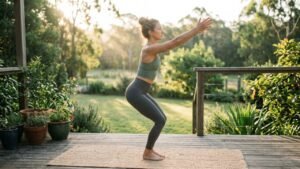
Stand with feet together or hip-width. Bend your knees and sit your hips back like you’re lowering into a chair that isn’t there. Keep your chest up and weight in your heels. Arms can reach forward or stay by your sides.
Chair pose builds the quads and glutes that act like shock absorbers for your knees. It also trains you to keep the knees tracking forward instead of collapsing inward.
Start higher if deep feels sketchy. Hold for five breaths. Stand up slow. Do a couple rounds. I still use this when my knees feel creaky in the morning. Wakes everything up fast.
Warrior II Without the Drama
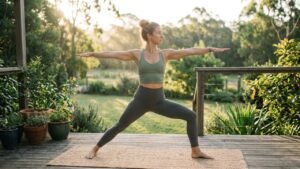
Step one foot back, turn the back foot out, and bend the front knee so it stacks over the ankle. Arms reach out. Soften that front knee instead of locking it.
This one builds strength in the standing leg while teaching alignment under a bit of load. Keep the front knee from drifting past the toes or caving in.
Switch sides. If your knee starts muttering, shorten the stance or put a block under the front thigh for support. No medals for suffering.
Bridge Pose for the Backside Support
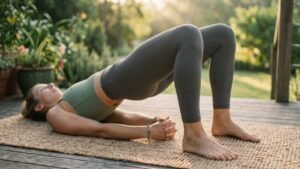
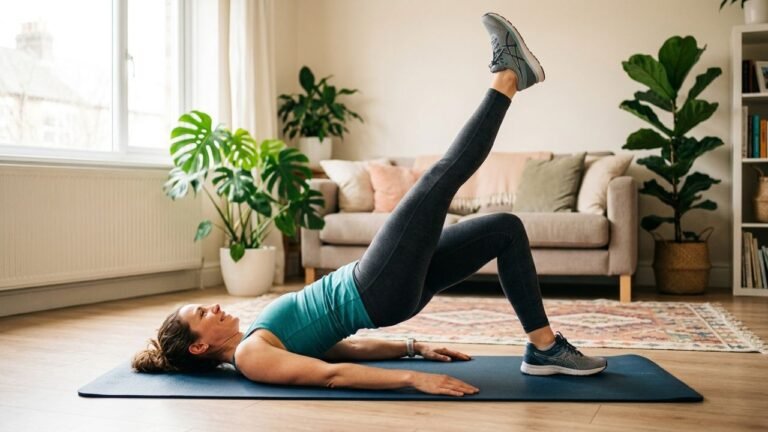
Lie on your back, bend your knees, feet flat on the floor hip-width apart. Press into your feet and lift your hips. Keep those knees tracking over your ankles.
Bridge strengthens the glutes and hamstrings. Those muscles pull some of the load off the front of the knee. It also opens the front of the hips, which can stop the knee from having to compensate.
If both hips feel like too much, try a lower lift or a careful single-leg version. Hold five to eight breaths. Lower slow.
Wall Sit (Chair Pose’s Chill Cousin)
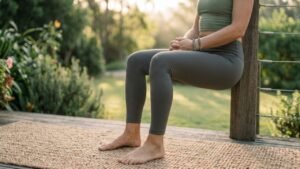
Stand with your back against a wall. Slide down until your knees bend to a comfortable angle—maybe 45 degrees to start. Hold.
This builds endurance in the quads without the balance challenge. Start with 20–30 seconds and work up. Your knees get stronger from the controlled effort. I do these while watching TV sometimes. Multitasking at its finest.
Gentle Knee Circles and Controlled Bending
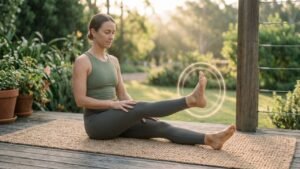
Sit on a chair or the floor. Extend one leg and slowly circle the foot from the ankle, then bend and straighten the knee with control. Keep it small and smooth.
This keeps the joint moving and lubricated without loading it. Perfect for warm-ups or days when everything feels a little crunchy. Do both sides.
Standing Quad Stretch with Something to Hold

Stand near a wall or chair. Bend one knee and hold the ankle or pant leg. Keep the standing knee soft and the hips level.
Tight quads can yank on the knee. This stretch eases that pull while the standing leg works on balance. Hold 20–30 seconds each side.
Figure-Four for the Outer Hip Stuff
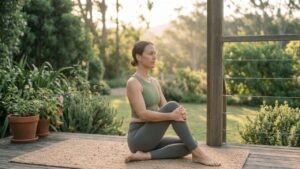
Lie on your back, cross one ankle over the opposite thigh, and gently pull the bottom leg toward you.
The outer hip and IT band area often mess with knee tracking. Opening this up can help the knee move cleaner. Keep it gentle. No forcing.
A Simple Routine That Doesn’t Take Forever
You don’t need an hour. Ten or fifteen minutes a few times a week is enough to start seeing changes.
Here’s what I usually do:
- Mountain with knee engagement – about a minute
- Chair pose – three rounds of five breaths
- Warrior II each side – five breaths
- Bridge – two rounds
- Wall sit – 30 to 60 seconds
- A few knee circles and a short stretch
Add or drop based on how the day feels. Consistency beats intensity every time. I’ve skipped weeks and felt the difference when I came back—stiffer, weaker, more noise from the knees. Short regular sessions keep things quieter.
Pay attention after a week or two. Less morning stiffness? Stairs feeling less dramatic? That’s the good stuff.
Mistakes That Make Everything Worse
People lock their knees in standing poses. That just shoves force straight into the joint. Keep a tiny bend.
Knees cave inward during chair or warrior. Gently push them outward so they track over the toes.
Going too deep too soon. Depth is not the goal. Control is.
Skipping any kind of warm-up. Cold joints don’t love sudden deep bends.
Holding the breath like you’re underwater. Breathe so the muscles stay responsive instead of bracing.
I’ve done every single one of these. The knees always let me know. Once I cleaned them up, the poses started helping instead of irritating.
What Actually Changed for Me
A few years ago my knees started sounding like popcorn every time I stood up. Running was off the table. Even longer walks left me sore the next day. A physical therapist told me to strengthen the support muscles and improve mobility. Yoga was the thing that stuck because I could do it at home with basically zero gear.
I started with the basics—mountain, chair against the wall, bridge. Progress felt slow at first. Then one day I realized I’d walked up three flights of stairs without thinking about my knees once. That was the moment it clicked.
Now I mix these poses into my week and my knees rarely put up a fight. They’re not perfect. Nothing is. But they’re stronger and more reliable. That’s the real win for me.
Little Extra Things That Help
Warm up with a couple minutes of marching in place or gentle leg swings.
Pay attention to your feet. Strong, grounded feet help the knees track better.
Pair the practice with everyday stuff: stand up and sit down with control, take the stairs when you can, and stop sitting with crossed legs for hours if you can help it.
And listen to your body more than any article—including this one.
Wrapping It Up
Knee yoga poses give you a practical way to strengthen the muscles that protect your joints and keep them moving decently. Start simple. Stay consistent. Respect your limits. The poses we talked about—mountain engagement, chair, warrior II, bridge, wall sits, and the gentle mobility work—cover the main bases without needing fancy equipment or advanced flexibility.
Your knees do a lot of quiet work for you every day. Give them some steady support and they usually stop complaining as much. Grab a mat or just use the floor, try a few of these today, and check in after a week. You’ve got this.
Now go move those knees—gently.
FAQs
Can yoga really help with knee pain?
For a lot of people, yes—especially when the pain comes from weak supporting muscles or wonky alignment. It won’t fix every problem, so check with a professional if things are serious.
How often should I do these?
Three or four times a week works well for most. Even two solid sessions beat zero.
What if a pose hurts my knee?
Stop that version. Modify with props, reduce the range, or skip it. Sharp pain means no.
Do I need special stuff?
Nope. A chair, a wall, and maybe a blanket or block cover almost everything.
How long until I notice anything?
Some people feel better mobility in a couple weeks. Strength gains usually show clearer after four to six weeks of sticking with it.
Is chair pose okay if my knees are already cranky?
It can be, when you keep the position higher and the alignment clean. Listen to what your body says that day.
Pick two or three that feel doable and build from there. Your knees adapt when you give them consistent, smart work instead of random intensity.