Knee pain sucks. Especially when it sneaks up on you during everyday stuff like climbing stairs, getting out of the car, or just walking to the kitchen for coffee. If you’re a woman dealing with this, you’re not alone. Hormones, wider hips, pregnancy history, and even the way we tend to move can put extra stress on those joints. I’ve been there myself after years of weekend hikes and one too many awkward lunges in group fitness classes. One day my knees started talking back, and not in a friendly way.
The good news? You don’t need a fancy gym membership or expensive equipment to fight back. Simple at-home exercises can strengthen the muscles around your knees, take pressure off the joint, and help relieve that nagging pain. I’m talking real relief you can feel in a few weeks if you stay consistent.
Ready to give your knees some love? Let’s walk through the 10 best knee pain exercises for women that actually work. These moves focus on building strength in the quads, hamstrings, glutes, and hips—the real support system for your knees.
10 Best Knee Pain Exercises for Women (Quick Comparison)
| Exercise | Main Muscles Worked | Difficulty | Equipment Needed | Best For |
|---|---|---|---|---|
| Seated Leg Raises | Quads | Beginner | Chair | Building strength gently |
| Standing Quad Stretch | Quads | Beginner | Wall/Chair | Flexibility & relief |
| Glute Bridges | Glutes, Hamstrings | Beginner | None | Hip & core support |
| Clamshells | Outer Hips | Beginner | Optional band | Knee tracking |
| Wall Sits | Quads | Intermediate | Wall | Endurance |
| Step-Ups | Quads, Glutes | Intermediate | Low step | Functional strength |
| Heel Slides | Hamstrings | Beginner | None | Mobility |
| Side-Lying Leg Lifts | Outer Hips | Beginner | None | Stability |
| Calf Raises | Calves | Beginner | Wall/Chair | Lower leg support |
| Mini Squats | Quads, Glutes | Beginner-Intermediate | None | Everyday strength |

Pick the ones that match your current level and build from there. You’ve got this.
Why Women Deal with Knee Pain Differently
Ever notice how knee issues seem to show up more often for us? It’s not just in your head. Women tend to have a wider pelvis, which changes the angle of the thigh bone and puts more stress on the knees. Add in hormonal shifts that can loosen ligaments, and you’ve got a recipe for trouble.
I used to brush it off as “just getting older.” Then a physical therapist friend pointed out that weak hips and glutes were making my knees work overtime. Once I started targeting those areas, the pain dialed down fast. Strengthening the right muscles takes the load off the joint itself. That’s the whole point of these exercises.
Safety First: Don’t Skip This Part
Before you jump in, listen up.
If your knee is swollen, red, or locks up, stop and talk to a doctor. Same goes if the pain came from a recent injury. These exercises are for general knee discomfort and prevention, not serious injuries.
Start slow. Use a chair or wall for balance if you need it. Wear supportive shoes or go barefoot on a non-slip surface. And breathe—holding your breath helps no one.
Do these moves 3–4 times a week. Give yourself rest days. Consistency beats intensity every time.
1. Seated Leg Raises
This one looks almost too easy. Don’t let that fool you.
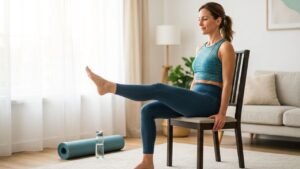
Sit tall in a sturdy chair with your feet flat on the floor. Straighten one leg out in front of you until it’s parallel to the ground. Hold for 3–5 seconds, then lower it slowly. Switch sides.
Do 10–12 reps per leg.
Feel that burn in the front of your thigh? That’s your quad working. Strong quads act like shock absorbers for the knee. I started doing these while watching TV and noticed less ache when I stood up after long sits. Perfect for days when standing exercises feel like too much.
Tip: Point your toes toward the ceiling to keep the muscle fully engaged.
2. Standing Quad Stretch (with Support)
Most of us skip stretching until something hurts. Big mistake.
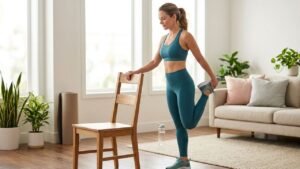
Stand near a wall or chair. Bend one knee and grab your ankle behind you. Gently pull your heel toward your glute until you feel a stretch in the front of your thigh. Keep your knees close together and your posture tall.
Hold 20–30 seconds each side. Repeat 2–3 times.
This stretch keeps the quads from getting tight and pulling on the kneecap. I used to feel tight after long walks. Adding this stretch made a noticeable difference. Just don’t yank—gentle is the name of the game.
3. Glute Bridges
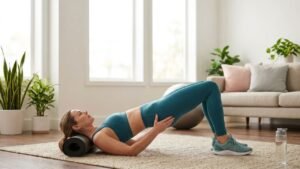
Your glutes are the powerhouse that many women underuse. Weak glutes force the knees to pick up the slack.
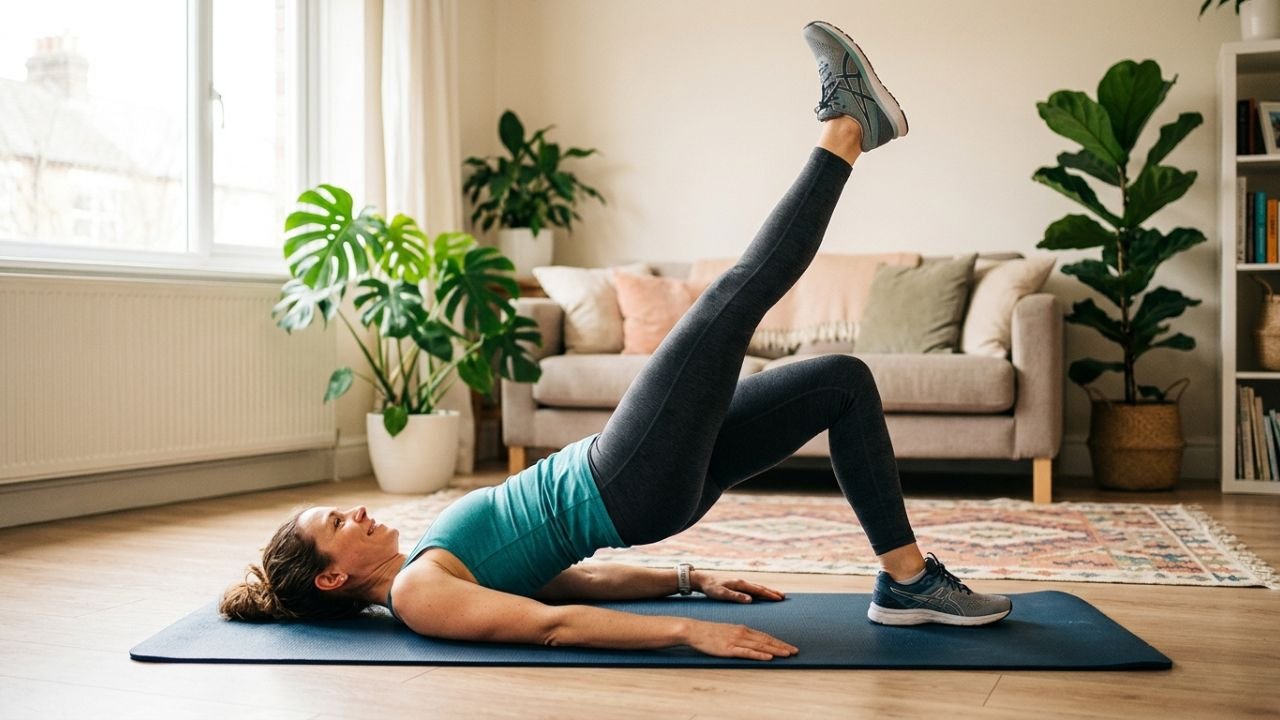
Lie on your back with knees bent and feet flat on the floor, hip-width apart. Press through your heels and lift your hips toward the ceiling until your body forms a straight line from shoulders to knees. Squeeze your glutes at the top, then lower slowly.
Do 12–15 reps.
Want more challenge? Hold at the top for 3 seconds or try single-leg bridges later. This move strengthens the backside and stabilizes the pelvis. After a couple weeks of these, my knees felt more supported during walks. Plus, it’s a sneaky core workout too.
4. Clamshells
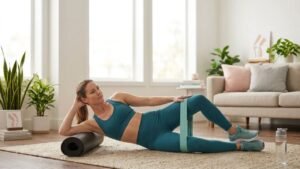
Side-lying work might feel weird at first, but stick with it.
Lie on your side with knees bent at about 45 degrees and stacked. Keep your feet together. Open your top knee like a clamshell while keeping your feet touching. Lower with control.
Do 12–15 reps per side.
This targets the outer hip muscles that keep your knees tracking properly. Weak hips often lead to knees caving inward—hello, extra stress. I added clamshells after noticing my knees drifted during squats. The difference showed up in how steady I felt on uneven ground.
Add a resistance band above the knees once it feels easy.
5. Wall Sits
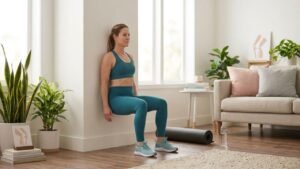
Hate them all you want—they work.
Stand with your back against a wall. Slide down until your knees bend to about 90 degrees (or as low as feels comfortable). Keep your back flat against the wall and hold.
Start with 20–30 seconds. Build up to 45–60 seconds. Do 3 rounds.
This isometric hold builds endurance in the quads without the joint stress of moving up and down. I do these while waiting for my coffee to brew. It’s boring, sure, but effective. If 90 degrees hurts, stay higher. Progress happens at your own pace.
6. Step-Ups (Low Step)
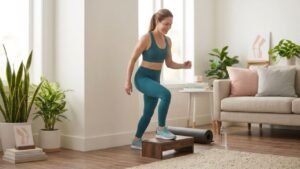
You don’t need a tall box. A sturdy low step or bottom stair works fine.
Place one foot fully on the step. Press through that heel to lift your body up until both feet are on the step. Step back down with control. Complete all reps on one side before switching.
Do 8–12 reps per leg.
This mimics real-life movements like climbing stairs and strengthens the entire leg. Start with a low height. I once rushed this and felt a twinge—lesson learned. Slow and steady wins. Hold a light weight in each hand later if you want more challenge.
7. Heel Slides
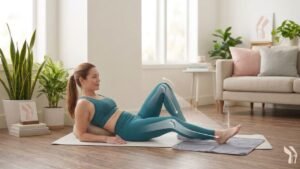
Great for gentle range of motion and hamstring activation.
Lie on your back with both legs straight. Slowly slide one heel toward your glute, bending the knee as far as comfortable. Then slide it back out. Keep the movement smooth.
Do 10–12 reps per leg.
This keeps the joint moving without heavy load. Perfect on days when your knees feel stiff in the morning. I use these as a warm-up before other exercises. They wake everything up without drama.
8. Side-Lying Leg Lifts
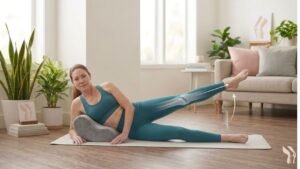
Another hip-focused move that protects the knees.
Lie on your side with legs stacked and straight. Lift the top leg toward the ceiling about 12–18 inches, then lower slowly. Keep your hips stacked and avoid rolling backward.
Do 12–15 reps per side.
Strong outer hips help prevent the knee from collapsing inward during walking or running. After adding these regularly, I noticed less side-to-side wobble in my knees on longer walks. Small change, big payoff.
9. Calf Raises
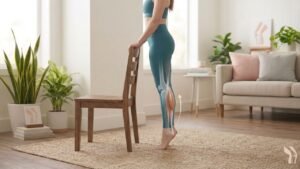
Your calves play a supporting role most people forget.
Stand near a wall or chair for balance. Rise up onto the balls of your feet, lifting your heels as high as comfortable. Lower slowly.
Do 15–20 reps.
Strong calves help with overall lower-leg stability and shock absorption. I used to get tight calves after long days on my feet. These fixed that and took some pressure off my knees. Try them on a step for a bigger range of motion once you’re ready.
10. Mini Squats (Partial Range)
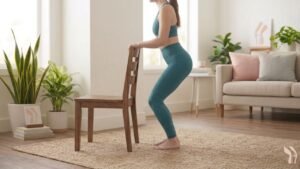
Full squats can bother sensitive knees. Mini versions give you the benefits without the risk.
Stand with feet hip-width apart. Push your hips back slightly and bend your knees just a little—like you’re about to sit in a high chair. Keep your chest up and weight in your heels. Return to standing.
Do 10–15 reps.
Focus on control. These strengthen the quads and glutes while staying knee-friendly. I prefer these over deep squats most days. They still make my legs work without the “uh-oh” feeling in the joint.
How to Put These Together into a Simple Routine
You don’t need to do all 10 every session.
Pick 5–6 exercises and rotate them. Example beginner routine:
- Seated Leg Raises – 2 sets
- Glute Bridges – 2 sets
- Clamshells – 2 sets per side
- Wall Sit – 3 holds
- Heel Slides – 2 sets
- Calf Raises – 2 sets
Rest 30–60 seconds between sets. The whole thing takes about 15–20 minutes. Do this 3 times a week and add the other moves on alternate days.
Listen to your body. Some mild muscle fatigue is normal. Sharp joint pain is not. Scale back if needed.
Extra Tips That Make a Difference
Warm up with a short walk or marching in place for 3–5 minutes.
Ice after workouts if your knees feel inflamed. Heat works better for stiffness before activity.
Stay consistent for at least 4–6 weeks before judging results. Strength gains take time.
Wear shoes with good support during the day. Soft, worn-out sneakers don’t help.
Watch your form in a mirror or record yourself on your phone. Small adjustments matter.
When You Should Call a Professional
These exercises help most mild to moderate cases. But if pain lasts more than a couple weeks, gets worse, or comes with swelling and locking, see a doctor or physical therapist. They can check for things like meniscus issues or arthritis that need different care.
I waited too long once and ended up with a longer recovery. Don’t be like past me.
Final Thoughts
Knee pain doesn’t have to run your life. These 10 exercises give you a practical way to strengthen the muscles that protect your knees and ease discomfort right at home. Start where you are. Stay consistent. Track how you feel after a few weeks—you’ll probably notice stairs feel less intimidating and daily movement gets easier.
Your knees carry you through a lot. Give them some attention and they’ll return the favor. Grab a chair, clear a little floor space, and try a couple of these today. Your future self will thank you.
Got a favorite move from the list or a question about form? Drop it in the comments. We’re all figuring this out together.
FAQs
How often should I do these knee exercises?
Aim for 3–4 times per week. Rest days help muscles recover and get stronger.
Can I do these if I have mild arthritis?
Many women with mild arthritis find these helpful, but check with your doctor first. Stick to pain-free ranges.
How long until I feel results?
Some people notice less stiffness in 1–2 weeks. Strength and lasting relief usually take 4–6 weeks of consistency.
Do I need any equipment?
Nope. A chair, wall, and maybe a resistance band later are all you need. Keep it simple.
Should I feel pain during the exercises?
Mild muscle burn is okay. Sharp or joint pain means stop and modify or skip that move.
Can these exercises help prevent future knee problems?
Yes. Stronger supporting muscles reduce stress on the joint over time.