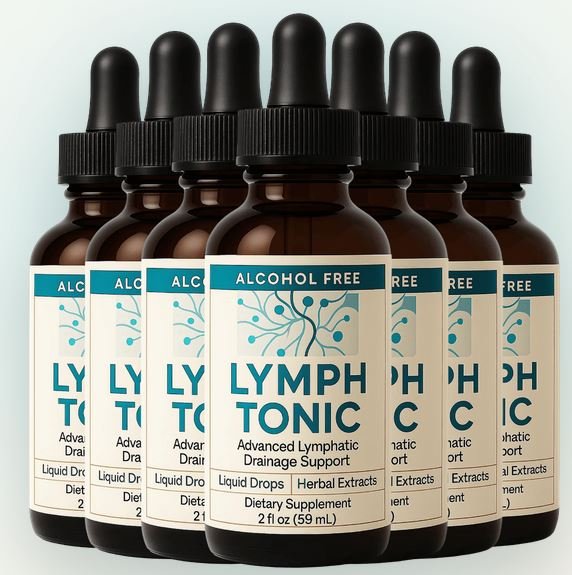
Okay, friend, let’s talk about something that’s been buzzing in the wellness world. You’ve probably seen the ads pop up on your social media feed or heard a friend mention it in passing. “Lymph Tonic.” It sounds like something you’d order at a fancy juice bar, right? But it’s actually a supplement, and people are getting really curious about whether it can actually help with that sluggish, puffy, “I-feel-like-a-human-sponge” feeling.
I’ll be honest with you. The first time I saw an ad for it, I totally scrolled past. Another supplement, another dropper bottle with fancy marketing copy. But then a close friend of mine—we’ll call her Sarah—called me, completely frustrated. She’d been dealing with persistent leg heaviness and puffiness for months. She tried compression socks, elevated her feet every evening, drank what felt like an ocean of water daily, and still woke up each morning with swollen ankles. She was over it. She asked me to do a deep dive for her. So, I spent the last few weeks reading through everything I could find on Lymph Tonic—the ingredient research, reviews, complaints, and the science behind it all.
So, you and me? We’re going to cut through the noise. Let’s look at what Lymph Tonic actually is, what’s in it, whether it’s a total scam or a legit product, and if it’s worth your hard-earned cash in 2026. Grab a coffee (or a glass of water, you health nut, you), and let’s dive in.
<<< LYMPH TONIC 50% Off: Buy Now! >>>
LYMPH TONIC Key Features at a Glance
| Feature | Details |
|---|---|
| Product Name | Lymph Tonic |
| Format | Liquid tincture (alcohol-free) with dropper |
| Serving Size | Two full droppers (approx. 2 mL) once daily |
| Key Ingredients (Example) | Boswellia Serrata, Curcumin, Horse Chestnut Extract, Nattokinase, Quercetin, Gotu Kola, Ginger, Baicalein |
| Key Ingredient Profile | 600 mg proprietary blend per serving |
| Primary Benefit | Supports healthy lymphatic drainage and circulation |
| Alcohol-Free | ✅ Yes (uses vegetable glycerin base) |
| Other Ingredients | Purified Water, Vegetable Glycerin, Natural Flavoring |
| Manufacturing | Made in the USA |
| Purchase Options (50% Off) | Official website only (trylymphtonic.com) |
| Guarantee | 60-day money-back guarantee |
| Cautions | Not for use during pregnancy/breastfeeding, or with certain medications |
| Important Note | Always consult your doctor before starting any new supplement. |
What Exactly Is Lymph Tonic?
Alright, let’s get the basics down. Lymph Tonic is a liquid herbal supplement marketed specifically to give your lymphatic system a little nudge. The lymphatic system is basically your body’s sewage and filtration system. It’s a network of tissues and organs that help rid your body of toxins, waste, and other unwanted materials.
When that system gets sluggish, you can feel it. You might experience fluid retention, puffiness (especially in your legs and ankles), leg heaviness, or just a general sense of feeling “off” . Lymph Tonic claims to support healthy lymphatic drainage and circulation, helping to get things moving again.
The Delivery Method: Liquid vs. Pills
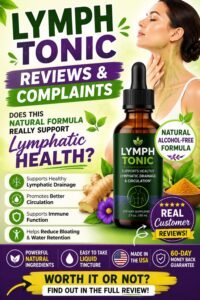
One of the first things that caught my eye is that it’s a liquid tincture. Most supplements come in pill form, but this one comes in a 2-fluid-ounce dropper bottle. The recommended dose is two full droppers once a day, either directly under your tongue or mixed into water or juice.
Why liquid? The company argues that liquid tinctures absorb more efficiently than capsules or tablets. IMO, this makes sense. Liquid hits your bloodstream faster than a pill that has to dissolve in your stomach. But is that a game-changer? Eh, maybe. It depends on the person. What I do like is that this formula is alcohol-free. A lot of traditional tinctures use alcohol as a base. If you’re sensitive to alcohol, sober, or just don’t love the taste of booze in your morning wellness routine, this is a huge plus .
The Ingredients: The Good, The Bad, and The “Huh?”
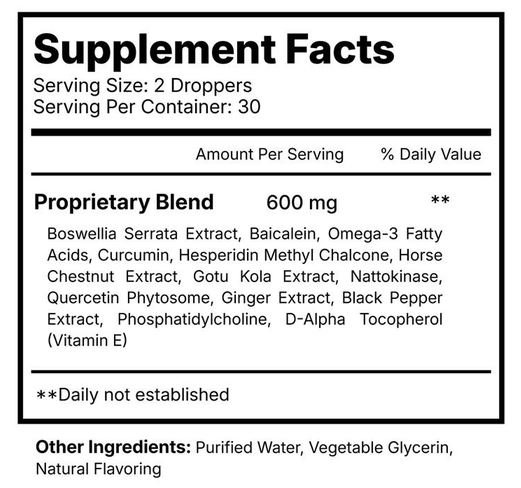
This is where things get interesting. A supplement is only as good as what’s inside it, right? The official Lymph Tonic product contains a blend of botanical ingredients. The star of the show? You guessed it—horse chestnut extract.
Key Ingredients and What They Do
Let’s break down the heavy hitters:
-
Horse Chestnut Extract: This is the gold standard botanical ingredient for venous issues and fluid retention . This isn’t some trendy, unproven herb. Horse chestnut seed extract has solid clinical backing for helping with symptoms of chronic venous insufficiency (CVI), which includes leg swelling and heaviness . In fact, when I saw this on the label, my ears perked up. It gives the formula real credibility.
-
Other Supporting Herbs: The formula also includes a blend of other herbs common in lymphatic health support:
-
Cleavers (Galium aparine): Traditionally used to support lymphatic function and reduce fluid retention. It’s one of those herbs that herbalists have used for a long time.
-
Red Root (Ceanothus americanus): Known for its affinity for the lymphatic system and often used to promote lymphatic drainage.
-
Echinacea (Echinacea angustifolia): Typically known for immune support, but also plays a role in lymphatic health.
-
Burdock Root (Arctium lappa): A popular blood purifier and detoxifier. Think of it as a janitor for your insides .
-
Phytolacca (Pokeweed root): An herb that has been used in traditional medicine for lymphatic congestion . But a heads-up: It can be potent. We’ll talk about cautions in a minute.
-
The Big Red Flag: Vague Dosages
Here’s my main complaint. The official website for the popular version of Lymph Tonic that you see in ads doesn’t prominently disclose the full per-ingredient dosage breakdown . This makes it harder to evaluate the potency. You see a blend, but you don’t know exactly how much of each herb you’re getting.
That’s a bit frustrating, right? In the wellness world, the dose makes the poison (or the cure). For example, you can buy horse chestnut extract on its own and know you’re getting a standardized dose of the active compound (aescin). When it’s hidden in a proprietary blend, you’re trusting the company to get it right. And in a market that’s unregulated, that trust can be risky.
The Other Version: What If It’s a Homeopathic Product?
Now, here’s a twist that might confuse you. There’s another product called “Lymph Tonic III” out there, and it’s a completely different beast. It’s labeled as a homeopathic product, and its ingredient list includes stuff like Arnica Montana and even something called “Rancid Beef” . Yes, you read that right.
FYI: This isn’t the supplement most people are talking about in reviews. The popular Lymph Tonic is a herbal supplement, not a homeopathic one. But it highlights the confusion out there. When you’re shopping, make sure you’re getting the herbal formula if that’s what you’re looking for. I’m going to focus on the herbal version that’s making waves.
Does Lymph Tonic Actually Work? Real Reviews and Customer Feedback
<<< LYMPH TONIC 50% Off: Buy Now! >>>
Alright, the million-dollar question. Does taking a few droppers of this stuff actually make you feel less like a puffy balloon?
What People Are Saying (The Positives)
I scoured through various Lymph Tonic reviews, and the feedback is actually… pretty positive for the most part, especially when it comes to specific claims.
Here’s what users commonly report:
-
Reduced Leg Heaviness: A lot of people mention that their legs feel lighter and less tired, especially towards the end of the day. This makes total sense if the horse chestnut extract is doing its job supporting circulation .
-
Less Puffiness: Many reviewers noticed a reduction in swelling in their legs and ankles. This is the main reason people buy this product.
-
Better Comfort During Travel: Some users specifically mentioned it helped them avoid that “puffy ankle” feeling when they were stuck on long flights or sitting for long periods .
-
Appreciation for the Taste: Since it’s alcohol-free, people find it gentler on the palate. They could take it sublingually without feeling like they just did a shot of vodka.
Many reviews mention that the key is consistency. “Give it at least 4 to 6 weeks of consistent use,” is a common refrain . This isn’t a magic pill that works overnight. It’s a gentle, gradual support system.
The Common Complaints (The Negatives)
Of course, it’s not all sunshine and rainbows. Here are the gripes people have:
-
“It Didn’t Do Anything for Me”: This is the number one complaint with any supplement. Some people just don’t feel a difference. Their results were minimal or non-existent .
-
“Where are the Dramatic Results?”: Some users expect to see a major drop in water weight overnight. Lymph Tonic isn’t a diuretic in that sense. It’s supporting your body’s natural processes, so the results are often subtle and cumulative .
-
The Price Tag: This stuff is not cheap. Compared to other lymphatic support products or even just buying a standalone horse chestnut supplement, it’s an investment. The “buy more, save more” discounts are tempting, but they lock you into a bigger upfront cost .
-
Vague Marketing Claims: Honestly, this is my biggest pet peeve. The marketing language sometimes sounds a bit… sensational. You see phrases like “unlocks forbidden enzyme protocols” or “targets four biological pathways.” Come on. That’s just fluff . It doesn’t add scientific clarity. It just makes you roll your eyes. It tries to sound sciency when they could just tell you the truth about the herbs.
The Elephant in the Room: Is Lymph Tonic a Scam?

Let’s address the ugly side of the wellness industry. When a product gets popular, the scams come crawling out of the woodwork. So, is this product a flat-out scam?
In my opinion, based on the research, it’s not a scam in the sense that it’s a completely fake product. The ingredients (like horse chestnut) have legitimate scientific backing . The St. Francis Herb Farm version of “Lymph Tonic” is a well-known, respected product in the herbalist community .
However, and this is a big “however,” you have to be careful who you are buying from.
The “Scam” Warning
Some online retailers (and even some of the affiliate marketing funnels) are selling a version of “Lymph Tonic” that is run by a brand-new website with zero track record.
According to some reviews, the domain for these versions was only registered recently, leaving it with virtually no operational history. These sites often have placeholder links in the footer that lead nowhere, and they heavily push “Buy More, Get More Discounts” tactics to drive quick sales .
This is the “scam.” It’s not that the product itself is poison. It’s that the seller might be a fly-by-night operation. They launch a lightweight, incomplete website, make a quick profit on a trendy term like “lymphatic drainage supplement,” and then they’re gone.
If you buy from a rushed site like that, the most likely outcome is simply no noticeable health changes, and you might end up with limited customer support when you try to ask questions or request a refund for those large bundles you were pressured into buying .
Here’s my advice: Only buy from the official website and check your billing terms immediately to ensure you didn’t accidentally agree to a monthly subscription. Keep an eye on your credit card statements .
Lymph Tonic vs. The Competition
If Lymph Tonic is pricey, what else is out there? I did a little comparison to see what the alternatives look like.
St. Francis Herb Farm Lymph Tonic
This is the big one. The St. Francis Herb Farm version is a classic. It’s been around for a long time and is sold by reputable retailers like Well.ca and Fullscript .
Here’s the catch: It contains alcohol. For a lot of people, that’s a dealbreaker.
Key Pros: Established reputation, detailed ingredient list with exact QCE (Quantity Crude Equivalent) disclosed , and often cheaper than the newer alcohol-free version you see in ads.
Key Cons: Tastes like alcohol, and may not be suitable for everyone.
The alcohol-free version (the one we’re reviewing) is a genuine quality-of-life improvement over the St. Francis one if you hate the taste of grain alcohol .
Herbs Etc. Lymphatonic
This is another strong competitor that comes in softgel capsules . A similar blend of herbs (Echinacea, Red Root, etc.).
Key Pros: Super convenient. No taste, no droppers, no mixing. Just pop it like any other pill.
Key Cons: Liquid tinctures are generally thought to be absorbed faster.
Who Should (and Shouldn’t) Use This Stuff?
Before you click “add to cart,” let’s talk about who this is actually for.
This is probably for you if:
-
You deal with chronic leg heaviness or puffiness that isn’t tied to a serious medical condition.
-
You sit or stand for long periods (office workers, nurses, retail workers, frequent flyers).
-
You want an alcohol-free herbal option.
-
You are patient and willing to use it consistently for a few months.
-
You understand it’s a support system, not a magic cure.
Important Warnings (Please Read This Part!):
This product has a list of contraindications as long as my arm. I’m not joking. This stuff is potent .
Do NOT use this if:
-
You are pregnant or breastfeeding .
-
You have heart disease, high or low blood pressure, kidney or liver disorder, diabetes, or edema .
-
You are taking immunosuppressants or have an autoimmune disorder (like MS, AIDS, HIV) .
-
You are allergic to plants of the Asteraceae/Compositae/Daisy family .
Potential Side Effects:
People have reported headaches, inflammation of the eyes and throat, nausea, vomiting, and abdominal cramps . If you experience dizziness, confusion, muscle weakness, or difficulty breathing, stop use immediately and seek medical attention .
Seriously, folks, talk to your doctor. Especially if you’re on blood-thinning medications . This is non-negotiable.
Frequently Asked Questions About Lymph Tonic
You’ve got questions — I’ve got answers. Here are the most common things people ask about Lymph Tonic before they buy.
How long does it take to notice results?
Most users who report positive experiences notice changes between 3 and 6 weeks of daily use . This isn’t a magic pill that works overnight. Lymphatic support supplements work gradually, so consistency is key. Don’t expect dramatic swelling reduction after a few days — give it time to build up in your system.
Can I take Lymph Tonic with other supplements?
Generally yes, but there’s a big “but” here: if you’re taking blood thinners like warfarin or aspirin, you need to consult your healthcare provider first . That’s because Lymph Tonic contains nattokinase, which affects blood viscosity and coagulation. Better safe than sorry, right?
Is Lymph Tonic FDA-approved?
No dietary supplement is FDA-approved in the way prescription drugs are . Lymph Tonic is manufactured in a GMP-compliant facility, and it carries the standard FDA disclaimer that statements haven’t been evaluated to diagnose, treat, cure, or prevent any disease. That’s standard for the supplement industry.
Who should NOT take Lymph Tonic?
This is important. Do not use Lymph Tonic if you’re pregnant or breastfeeding . Also avoid it if you have:
-
Heart disease
-
High or low blood pressure
-
Kidney or liver disorders
-
Diabetes
-
Edema (swelling of hands, face, and feet)
Also skip it if you’re allergic to plants in the Asteraceae/Compositae/Daisy family .
Are there any side effects I should watch for?
Yes. Some people have reported headaches, inflammation of the eyes and throat . You might also experience nausea, vomiting, abdominal cramps, or diarrhea.
Stop using it immediately and see a doctor if you experience:
-
Dizziness
-
Confusion
-
Muscle weakness or pain
-
Abnormal heartbeat
-
Difficulty breathing
Is there a subscription or recurring billing?
Check the official website for current purchasing options, as these can change seasonally . Some buyers have reported getting signed up for subscriptions without realizing it — always double-check your billing terms when you purchase!
Can Lymph Tonic replace a healthy lifestyle?
No. Supplements work best when combined with balanced nutrition, regular physical activity, adequate hydration, quality sleep, and stress management . Think of Lymph Tonic as a support system, not a substitute for taking care of yourself.
Got more questions? Drop them in the comments — I’ll do my best to answer!
🙂
Final Verdict: Should You Buy Lymph Tonic in 2026?
Alright, let’s wrap this up. We’ve been through the highs, the lows, and the weird “rancid beef” homeopathic tangents.
Here’s my honest take:
Lymph Tonic (the alcohol-free herbal version) is a credibly formulated liquid supplement . It’s not a miracle product, and it won’t fix a serious medical condition, but for someone dealing with everyday fluid retention, leg heaviness, or puffiness, it’s worth a serious look. The horse chestnut extract alone is a heavy hitter. Its clinical backing gives the formula real credibility. The supporting ingredients round out a coherent anti-inflammatory framework, and the alcohol-free liquid format is a genuine quality-of-life improvement over most competing tinctures .
The good: It’s a legit herbal blend with a strong key ingredient. It’s alcohol-free. The 60-day money-back guarantee lowers the financial risk .
The bad: It’s expensive, the results are not guaranteed, and you have to be hyper-vigilant about where you buy it from. The marketing fluff is annoying, and the lack of full dosage transparency on some websites isn’t ideal.
If you’re in that target audience—puffy legs, sedentary job, looking for natural support—I’d say give it a shot. But buy from the official site, manage your expectations (give it at least 4 to 6 weeks of consistent use!), and definitely check with your doctor if you’re on any medications .
And remember, no supplement, no matter how fancy the dropper bottle is, can replace a healthy lifestyle. Drink your water, move your body, and maybe, just maybe, this little tonic can give your lymph system the gentle nudge it needs to keep up.
🙂
Disclaimer: I am not a doctor. This article is based on my research and personal opinion. This information is for educational purposes only and is not intended to diagnose, treat, or cure any disease. Please consult with a qualified healthcare professional before starting any new supplement.