Okay, let’s cut the fluff. You’ve probably seen the headlines screaming about brain games. “Train your brain!” “Get smarter in 10 minutes a day!” “Reverse aging!” It sounds like a late-night infomercial, right? I get it. I used to roll my eyes every time I saw an ad for a “revolutionary” brain training app.
But then, I stumbled across something that actually made me pause. Not a flashy ad, but a real, peer-reviewed study from McGill University. It claimed that a specific type of brain exercise could chemically rewind the clock on an aging brain. Not just make you better at a game, but literally change your brain’s chemistry to a state seen in someone a decade younger .
I had to dig deeper. And what I found was genuinely exciting. So, let’s chat about what this all means, what the best brain games for adults actually are, and why your standard crossword puzzle might not be cutting it.
Does Brain Training Actually Work? (The Science Stuff)
Before we get into the fun stuff (the games!), we need to answer the big question. Does this stuff actually work? For years, the scientific community has been split. Some said it was all hype. Others pointed to growing evidence of “neuroplasticity”—that fancy term for your brain’s ability to change and adapt at any age.
Here’s the deal. A meta-analysis (that’s a big study that looks at a bunch of smaller studies) published in 2025 reviewed the data and concluded that brain training games are effective for improving cognitive functions, processing speed, and working memory in healthy individuals . That’s a solid thumbs-up from the science world.
But the research that blew my mind came from that team at McGill. They did a clinical trial where they had healthy adults over 65 play a specific brain training game for 30 minutes a day. After just 10 weeks, the participants’ brain scans showed a significant increase in cholinergic activity. That’s a chemical system in your brain that’s crucial for attention, memory, and learning, and it typically declines with age .
The lead researcher, Dr. Etienne de Villers-Sidani, said, “The training restored cholinergic health to levels typically seen in someone 10 years younger” . And get this: he added that this is the first time any intervention, drug or non-drug, has been shown to do that in humans . Not a single pill out there can claim that specific effect.
This is the first time any intervention, drug or non-drug, has been shown to do that in humans.
It’s pretty wild to think that a few minutes on a tablet can do what pharmaceuticals are still trying to achieve.
The Secret Sauce: Why Some Brain Games Work Better Than Others
So, what was so special about the game in that study? It wasn’t just any old “brain game.” It’s a program called BrainHQ, and its secret is what scientists call “speed-based, adaptive exercises” .
Here’s how it works. The game isn’t just testing your vocabulary or trivia knowledge. It’s challenging the speed at which you can process information. And as you get better, it automatically gets harder. It’s like having a personal trainer for your brain who keeps increasing the weight on the mental bar .
This is a key distinction. Dr. de Villers-Sidani himself pointed out that many people assume crossword puzzles or reading are enough to keep their brains sharp. But he clarified that “not all activities truly promote neuroplasticity” . Passive reading or doing a puzzle you already know the answers to is like taking a leisurely walk. It’s fine, and it’s better than nothing. But to actually build muscle, you need progressive resistance. Your brain is the same.
The Best Brain Games for Adults: 10 Top Picks
So, what should you play? Based on the science and a little bit of personal experimentation (I’ve tried a bunch of these myself), here are the 10 best brain games and exercises that can actually help rewire your adult brain.
1. BrainHQ: The Scientist’s Choice
I have to start with this one. BrainHQ is the brain game that has the most scientific backing out there, thanks to that incredible McGill study . It’s the one that showed those “10 years younger” brain changes. It’s not the most glamorous app you’ll ever use, but it is effective if you stick with it.
The exercises are all speed-based. They work on things like visual processing, attention, and reaction time. The “Double Decision” exercise, for example, is one they found to be directly correlated with positive changes in brain chemistry .
-
Best For: Cognitive flexibility and reaction time.
2. The Game of Go: The Ancient Powerhouse
You might not have heard of this one. Go is an ancient Chinese board game that’s way more complex than chess. A review of evidence from South Korea found that Go training enhances executive functions, memory, and visuospatial reasoning . Even more impressive, they found that playing Go can increase neurotrophic factors like BDNF, which is like Miracle-Gro for your brain cells .
-
Best For: Strategic planning, problem-solving, and patience.
3. Dual N-Back: The Working Memory Champ
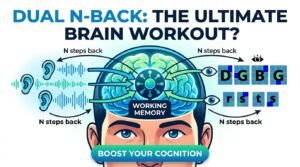
If you want a direct challenge for your working memory, this is it. Dual N-Back is a kind of brutal but scientifically validated exercise. It forces you to remember visual and auditory cues simultaneously, and the difficulty ramps up as you succeed. It’s like juggling with your mind. It’s not “fun” in the traditional sense, but it feels like a real workout, and I love the challenge.
-
Best For: Working memory and fluid intelligence.
4. Lumosity: The All-Rounder
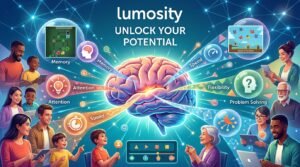
This is the “popular kid” of the brain training world. It offers a mix of games that target memory, attention, problem-solving, and processing speed. It’s colorful, fun, and gives you a nice little score to show your progress. It might not have the same hardcore, one-size-fits-all science as BrainHQ, but the variety is a huge plus. I use it when I want a fun, quick mental stretch.
-
Best For: A broad, fun cognitive workout.
5. Peak: The Personal Trainer
Peak is another great all-rounder app that feels very polished. It offers over 40 games designed by neuroscientists. What I really like about Peak is that it gives you insightful feedback and “Coaching” sessions to help you understand your cognitive strengths and weaknesses. It’s a great way to target your specific areas for improvement.
-
Best For: Personalized training with in-depth feedback.
6. Sudoku: The Logic Classic
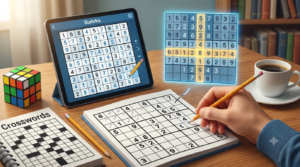
You can’t have a list of brain games without Sudoku. It’s a classic for a reason. This number-placement puzzle is fantastic for improving logical thinking, pattern recognition, and problem-solving skills. It’s not going to revolutionize your neural chemistry on its own, but if you push yourself to try harder puzzles, it’s a great workout for your brain.
-
Best For: Logic, deduction, and concentration.
7. Crossword Puzzles: The Verbal Workout
Crosswords are my go-to for a lazy Sunday morning. They’re not the fastest way to build new neural pathways, but they are an excellent exercise for your verbal memory, vocabulary, and general knowledge. They force you to recall information from the dusty corners of your memory, which is a great mental exercise.
-
Best For: Verbal fluency and memory retrieval.
8. Chess: The Grand Strategy
Chess is the ultimate game for strategic thinking. It forces you to think ahead, anticipate your opponent’s moves, and consider complex consequences. It’s a fantastic way to sharpen your problem-solving skills and improve your focus. And let’s be honest, it’s a lot more fun than a screen-based game.
-
Best For: Strategic thinking and long-term planning.
9. Elevate: The Skill Builder
Elevate is a brain training app that focuses more on practical, real-world skills. It’s not just abstract puzzles. It’s designed to help you get better at things like writing, reading comprehension, and mental math. I find it really useful because the skills you train seem to translate more directly into daily life, like in work or social settings.
-
Best For: Practical skills like reading comprehension and writing.
10. Physical Exercise and Learning New Skills (The Ultimate Brain Games)
Here’s the thing, and I can’t stress this enough: the best brain training isn’t always a “game.” Physical exercise is incredible for your brain. The Centers for Disease Control and Prevention recommends 150 minutes of moderate intensity activity a week to protect against cognitive decline .
But even better? Learning a new skill. Whether it’s picking up a musical instrument, learning a new language, or taking a cooking class. This is the ultimate form of neuroplasticity because you’re actively building new connections in your brain . It’s a holistic approach that challenges you in a real-world context. I honestly believe taking a salsa dancing class is better for your brain than a month of “brain training” apps.
-
Best For: Total brain health and long-term neuroplasticity.
How to Make Your Brain Training Actually Stick
Alright, you’ve got the list. Now, what’s the best way to do this? I’ve learned a thing or two from my own successes and failures with these games.
-
Do it Daily: The people in that McGill study did the training for just 30 minutes a day, every day . Consistency is more important than intensity. Even 15 minutes a day is better than a two-hour binge on a Saturday.
-
Mix It Up: Don’t just stick to one thing. If you do Sudoku every day for years, your brain gets used to it. It stops being a challenge. Variety is the key to keeping your brain stimulated . Switch between BrainHQ, a crossword, and a few games of chess.
-
Combine It with a Healthy Lifestyle: This is the most important part. Think of brain games as one piece of the puzzle. The real “brain game” is a combination of regular exercise, good sleep, a healthy diet, and social interaction . Cedars-Sinai neurologist Dr. Vernon Williams even noted that “improving sleep is the most important intervention you can make” for your brain .
Frequently Asked Questions
1. Can brain games really reverse aging?
That McGill study showed that a specific type of speed-based training restored cholinergic brain chemistry to levels seen in someone 10 years younger . This isn’t changing your chronological age, but it’s reversing some of the biological markers of aging in the brain. It’s “rewinding” the clock in a very specific, measurable way.
2. Are free brain games as good as paid ones?
It really depends. There are great free options like the classic puzzles (Sudoku, crosswords) and even free versions of some apps. However, the apps with the strongest scientific backing—like BrainHQ—are typically paid subscriptions. The research costs money to conduct, and that’s often reflected in the price. But don’t let a budget stop you; variety and consistency are more important than the specific app.
3. What’s the best brain game for memory?
For working memory, Dual N-Back is a fantastic, challenging choice. For overall memory and recall, good old-fashioned crossword puzzles and new skill learning are incredibly effective. The McGill study also highlighted that memory improvements were seen in participants using speed-based games .
4. How long should I play brain games each day?
The INHANCE trial that showed such dramatic results had participants training for 30 minutes a day . But don’t stress if you can’t hit that number. Even 15 minutes of focused training daily can make a big difference over time. Consistency matters way more than the number of minutes.
5. Can I just do crossword puzzles to keep my brain sharp?
Crosswords are great for vocabulary and verbal skills, but the science is showing they might not be enough to fully fight off cognitive decline on their own. The researcher from the McGill study specifically noted that they don’t necessarily promote the kind of deep neuroplasticity needed for more dramatic brain health improvements . It’s not that they’re bad; it’s that they shouldn’t be the only thing you do. Mix it up!